
David J. O'Sullivan, DMD — Frequently Asked Questions
991 High Point Dr, Naples, FL 34103 · 239-262-1813 · davidosullivandmd.com
Overview
Frequently Asked Questions
Everything you want to know before, during, and after your visit — answered by our team. Can't find what you're looking for? Just call us.
New Patients & Office
Are you currently accepting new patients?
Yes — we warmly welcome new patients of all ages! Whether you're new to Naples, recently moved, or simply looking for a new dental home, we'd love to meet you.
To get started, you can call our office at 239-262-1813 or visit our New Patient page to download your intake forms in advance. Completing paperwork before your visit helps us spend more time focusing on your care.
What should I expect at my first appointment?
Your first visit is all about getting to know you and establishing a complete picture of your oral health. It typically includes:
- A comprehensive oral exam by Dr. O'Sullivan
- Low-dose digital X-rays (if needed and not recently taken)
- An oral cancer screening
- A professional cleaning by one of our hygienists
- A conversation about your goals, concerns, and any recommended treatment
Please bring a valid photo ID, your dental insurance card, a list of any medications you take, and any recent dental X-rays if you have them. Plan for about 60–90 minutes for your first visit.
Do you see dental emergencies? Can I get a same-day appointment?
Absolutely. Dental emergencies don't wait for a convenient time, and neither do we. We make every effort to accommodate urgent patients the same day they call — including new patients.
Common emergencies we treat:
- Severe or persistent toothaches
- Broken, chipped, or knocked-out teeth
- Lost fillings or crowns
- Dental abscess or swelling
- Soft tissue injuries to the gums or lips
Call us immediately at 239-262-1813. If you reach voicemail outside office hours, leave a message and we'll return your call as soon as possible.
Where is your office located, and is parking available?
Our office is at 991 High Point Dr, Naples, FL 34103 — conveniently located off US-41 (Tamiami Trail), between Golden Gate Pkwy and Pine Ridge Rd. A helpful landmark: we're just south of Rooms To Go.
Office hours: Monday through Thursday, 8:00 am – 5:00 pm, and Friday, 8:00 am – 12:00 pm. We are closed on weekends, though emergency calls are returned as promptly as possible.
Free parking is available directly in front of the office. The entrance is wheelchair accessible, and we have an accessible restroom on-site.
Insurance & Payment
What dental insurance plans do you accept?
We accept most major dental insurance plans and work hard to help you maximize your benefits. We recommend calling our office at 239-262-1813 before your visit so we can verify your specific plan and let you know what's covered.
Our team will handle claims submission on your behalf and is happy to explain your benefits in plain language — no confusing insurance jargon. We accept Visa, Mastercard, and cash for any remaining balance.
What if I don't have dental insurance?
Not having insurance doesn't mean you can't receive great dental care. We welcome uninsured and self-pay patients, and our team will work with you to find solutions that fit your budget.
We encourage you to call us to discuss your situation. We can outline the cost of recommended treatments upfront so there are no surprises. We also encourage patients to ask about available payment options when they call to schedule.
Does insurance cover cosmetic dental procedures?
Most dental insurance plans do not cover purely cosmetic procedures such as teeth whitening, porcelain veneers, or cosmetic bonding, as these are considered elective rather than medically necessary.
However, some treatments serve both cosmetic and restorative purposes — for example, a tooth-colored filling or a crown placed on a damaged tooth — and those may be partially or fully covered depending on your plan. Our team will help you identify what your insurance will and won't cover before treatment begins.
How much do dental procedures cost?
Treatment costs vary depending on the type of procedure, the complexity of your individual case, and your insurance coverage. We believe in complete transparency — we'll always provide a clear cost estimate and discuss your options before starting any treatment.
The best way to get accurate pricing is to schedule a consultation. Dr. O'Sullivan will assess your needs and our team will prepare a detailed treatment plan with associated costs so you can make an informed decision without pressure.
Cosmetic & Preventive Dentistry
How often should I come in for a cleaning and checkup?
For most patients, we recommend a professional cleaning and comprehensive exam every six months. These visits allow us to remove tartar buildup that brushing and flossing at home can't reach, catch developing problems early, and screen for oral cancer.
Some patients — particularly those with a history of gum disease, dry mouth, or a high cavity rate — may benefit from visits every three to four months. Dr. O'Sullivan will recommend a schedule tailored specifically to your oral health needs at your first visit.
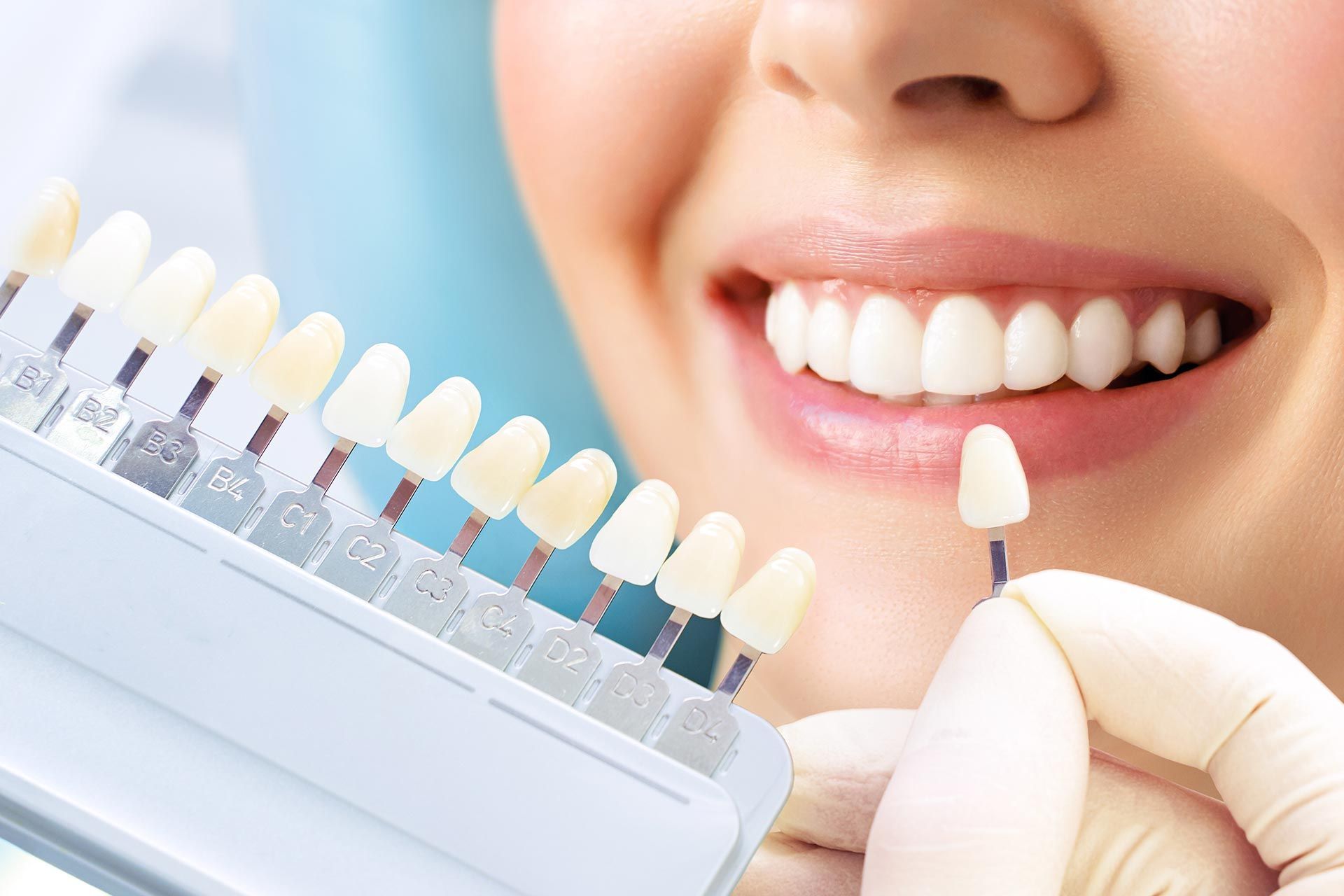
Is professional teeth whitening safe, and how long do results last?
Yes — professional whitening performed under Dr. O'Sullivan's supervision is safe and significantly more effective than over-the-counter options. We assess your teeth and gums first to ensure whitening is appropriate for you, and we use carefully calibrated concentrations to minimize sensitivity.
Results typically last 1–3 years, depending on diet and lifestyle habits (coffee, tea, red wine, and tobacco accelerate staining). Touch-up treatments can extend results. For best outcomes, we recommend whitening after your regular cleaning.
What's the difference between dental bonding and porcelain veneers?
Dental bonding uses a tooth-colored composite resin applied directly to the tooth in a single visit. It's an excellent, affordable option for minor chips, small gaps, and slight discoloration — no lab work required.
Porcelain veneers are custom-fabricated thin shells crafted in a dental lab and bonded to the front surface of the teeth. They offer a more durable, stain-resistant, and lifelike result — ideal for more extensive cosmetic changes or multiple teeth. Veneers require two visits and a slightly higher investment, but the results are typically more dramatic and longer-lasting (10–15+ years with proper care).
At what age should my child first see a dentist?
The American Academy of Pediatric Dentistry recommends a child's first dental visit by their first birthday, or within six months of the first tooth appearing — whichever comes first. Early visits help establish healthy habits, allow us to monitor development, and help children feel comfortable with dental care from a young age.
At David O'Sullivan DMD, we see patients of all ages and take extra care to make children feel at ease. We treat the whole family, so you don't need to find a separate pediatric dentist for your little ones.
Restorative & Surgery
Do root canals hurt? What should I expect during the procedure?
The short answer: no. The procedure itself should not be painful. The area is fully numbed with local anesthesia before we begin — most patients report feeling only mild pressure, similar to getting a large filling.
Root canals have an unfair reputation. The pain people associate with root canals is actually the infection that makes one necessary — and the procedure relieves that pain rather than causing it. You may experience mild soreness for a day or two afterward, easily managed with over-the-counter pain relievers. Most patients return to normal activity the next day.
When do I need a crown instead of a filling?
A filling is appropriate when decay or damage is limited to a portion of the tooth's surface. A crown is recommended when:
- The decay or damage covers more than half the tooth
- The tooth is cracked or fractured
- The tooth has been weakened by a root canal
- An existing large filling has failed
- The tooth needs to anchor a dental bridge
A crown encases the entire visible tooth, restoring its shape, strength, and appearance. Dr. O'Sullivan will always recommend the most conservative treatment that effectively addresses the problem.
How long is recovery after a tooth extraction?
Recovery time depends on the complexity of the extraction. For a simple extraction of an erupted tooth, most patients feel significantly better within 24–72 hours and are back to normal within a week.
Surgical extractions — such as for impacted wisdom teeth — may require 5–7 days or more. Key aftercare tips include:
- Avoid straws, smoking, and spitting for at least 24 hours (protects the blood clot)
- Apply ice packs in 20-minute intervals for the first day to manage swelling
- Eat soft foods — yogurt, soup, mashed potatoes — for the first few days
- Take pain relievers as directed
If pain suddenly worsens after day 2 or 3, contact us — this can be a sign of dry socket, which is easily treated.
What happens if I don't replace a missing tooth?
Leaving a gap untreated may feel harmless at first, but over time it can cause a cascade of problems:
- Tooth drifting: Neighboring and opposing teeth gradually shift into the gap, disrupting your bite
- Bone loss: The jawbone beneath a missing tooth begins to resorb (shrink) without a root to stimulate it
- Facial changes: Significant bone loss over time can alter the shape of your face and age your appearance
- Chewing difficulty: Missing teeth place extra stress on remaining teeth, accelerating wear
We offer several replacement options — implants, bridges, and partial dentures — each with different advantages. Dr. O'Sullivan will help you choose the right solution for your situation.
Implants & Dentures
Am I a good candidate for dental implants?
Most healthy adults with one or more missing teeth are good candidates for implants. The key requirements are:
- Healthy gums free of active periodontal disease
- Adequate jawbone density to support the implant post
- No uncontrolled systemic conditions that impair healing
- Non-smoker or willingness to quit (smoking significantly reduces success rates)
Conditions like diabetes or osteoporosis don't automatically disqualify you, but they require careful evaluation and planning. Patients with insufficient bone volume may be candidates for bone grafting prior to implant placement. The best way to find out is a consultation with Dr. O'Sullivan.
How long does the dental implant process take from start to finish?
The implant process typically spans 4–8 months from initial consultation to your final crown, though most of that time is healing rather than active treatment.
Here's a general timeline:
- Week 1: Consultation, X-rays, and treatment planning
- Week 2–4: Implant post surgically placed into the jawbone
- Months 1–5: Osseointegration — the implant fuses with bone (you're healing at home during this time)
- Month 5–6: Abutment placed and impressions taken for your custom crown
- Month 6–8: Final crown delivered and permanently attached
Cases requiring bone grafting may add several months to the process. Dr. O'Sullivan will give you a personalized timeline at your consultation.
My dentures feel loose. Is that normal, and what can I do?
Some looseness is normal — especially during the first few weeks as your gums and muscles adapt. However, persistent or worsening looseness is not something you should simply live with.
Loose dentures are most commonly caused by changes in jawbone shape over time (bone resorption), which occurs naturally after tooth loss. Solutions include:
- Relining: Resurfacing the inner fit surface of the denture to match your current gum contour
- Rebasing: Replacing the entire denture base while keeping the existing teeth
- Implant-supported dentures: Just 2–4 implants can anchor your denture securely and eliminate slippage entirely
We recommend annual exams even for full denture wearers so we can monitor fit and make adjustments before looseness becomes a problem. Call us at 239-262-1813 to schedule a fitting check.
What's the difference between an implant, a bridge, and a denture — which is best for me?
All three are excellent options for replacing missing teeth, and the right choice depends on your health, budget, timeline, and personal preferences. Here's a quick comparison:
- Dental Implant: A titanium post that fuses with the jawbone, topped with a crown. The most natural-feeling and longest-lasting option (potentially lifetime). Preserves jawbone. Requires surgery and several months of healing. Higher upfront cost.
- Dental Bridge: A fixed prosthetic anchored to the two teeth on either side of the gap. No surgery required, completed in two visits, and often covered by insurance. Does not preserve jawbone. Neighboring teeth must be prepared (slightly reduced).
- Partial or Full Denture: A removable appliance replacing one or more teeth. The most affordable option. No surgery. Requires removal for cleaning. May feel less secure than fixed options but can be stabilized with implants.
During your consultation, Dr. O'Sullivan will review your specific situation and help you weigh the pros and cons of each option — so you can make a confident, informed decision.


